.png)


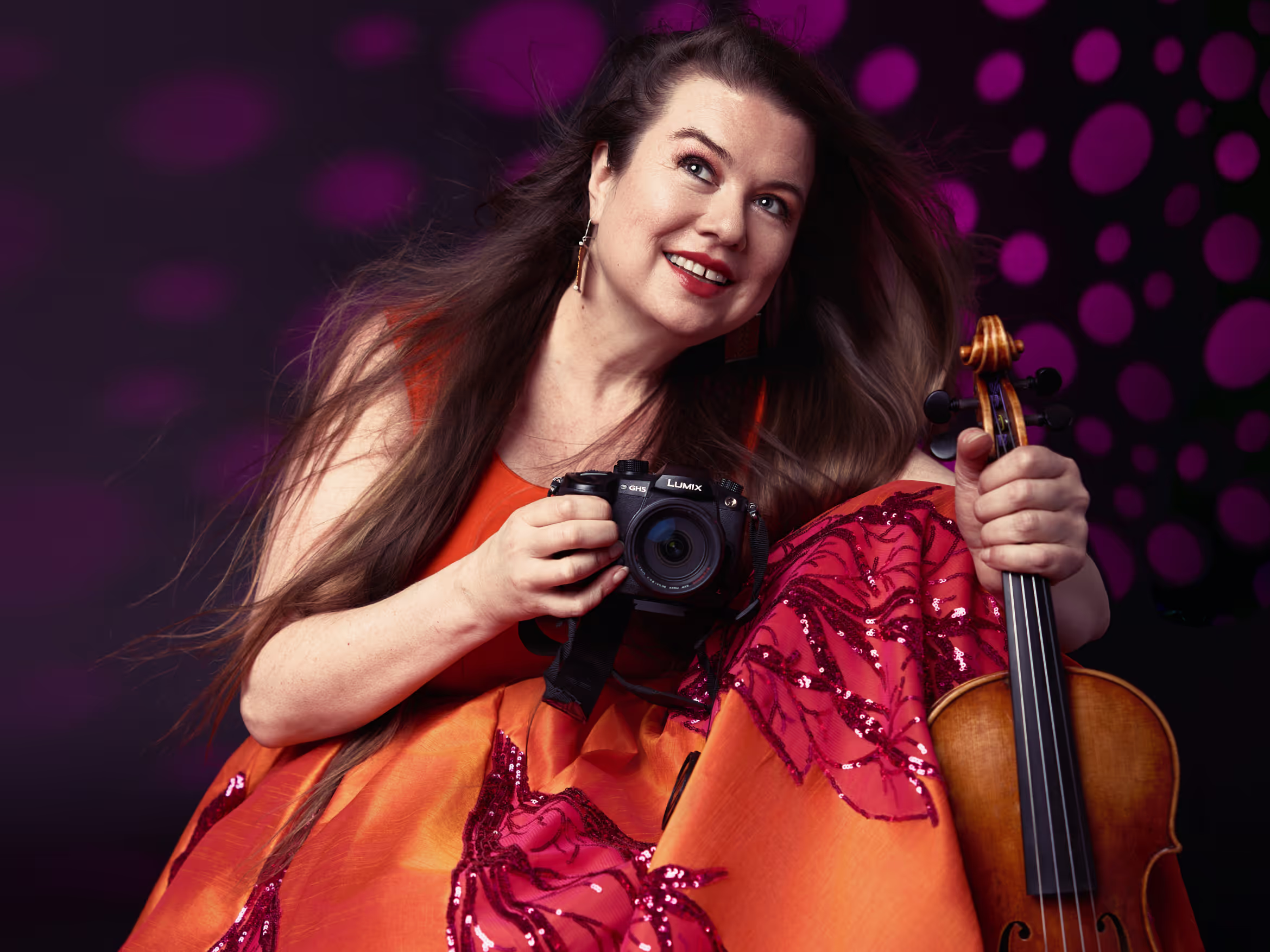
The Director
I never set out to become a filmmaker. I set out to tell the truth.
For most of my life, I kept quiet about the sexual assault I endured at the Curtis Institute in 1986. When I finally went public decades later, in 2019, I thought I might find closure. Instead, I was flooded with messages from other survivors – students, colleagues, musicians from around the world – all sharing similar stories. The scale of silence and institutional complicity was staggering. I realized I couldn’t walk away from this.
Dear Lara began as a DIY act of defiance. I picked up a camera and started filming, talking, and listening – not knowing where it would lead. While I’d spent many years working and collaborating as a musician, I had no formal training as a filmmaker. What I did have was a sense of urgency, and the trust of people who had waited far too long to be heard. Over time, an extraordinary team helped shape this film into something more forceful than any single voice.
Classical music has been my world since infancy. I understand its appeal, but I also know its darkness – the power imbalances, the myths of genius, the reverence for institutions that so often protect abusers. With this film, I wanted to break the silence from within. I wanted survivors – and there are so many of us – to feel seen, believed, and connected to me and to each other. I’m asking questions. What would justice look like if we truly prioritized people over reputations? How might classical music thrive if its creative voices were supported instead of silenced?
Music was my voice even before I spoke. With Dear Lara, I’m now using that voice to help others reclaim theirs.
-Lara St. John
The Advocate
.avif)
My work as an advocate for survivors of sexual harassment and assault began the moment that I agreed to speak to journalists openly about my own experience of being raped as a teenager by an elderly violin instructor. As I described in “Dear Lara,” I began to hear almost immediately from survivors of similar experiences. Unfortunately, I also began to learn the stories of others who did not ultimately survive the trauma they went through.
Once you have gone public about sexual assault, it is almost impossible not to become an advocate for people who have traveled down the same road you have. Many survivors have chosen to remain very private – and I completely understand their reasons for doing so. The reasons are always going to be complicated and very emotional. But those people still need someone to speak up for them and make their needs known. And all right-thinking people should deeply want someone to call out the people and institutions who have perpetrated, tolerated and enabled these sorts of crimes.
In most jurisdictions around the world, sexual assault is officially a serious crime, and it usually comes attached to some pretty heavy-duty penalties. But in too many cases, the statute of limitations does not do any favors for young and relatively powerless victims – who rarely have any clear idea of how to react to what has been done to them. Educational institutions often close ranks even against the few who are bold enough to speak up. And legal institutions do not have a great track record of coming to the rescue, especially in cases where the accused have dramatically deeper pockets and stronger support networks than the accusers.
Given how the cards are stacked against most survivors, it has been an honor to appear on panels and at hearings where a credible, adult advocate is needed to speak up for this horribly mistreated group of people. I will always be glad to do so whenever I have that opportunity.
.avif)
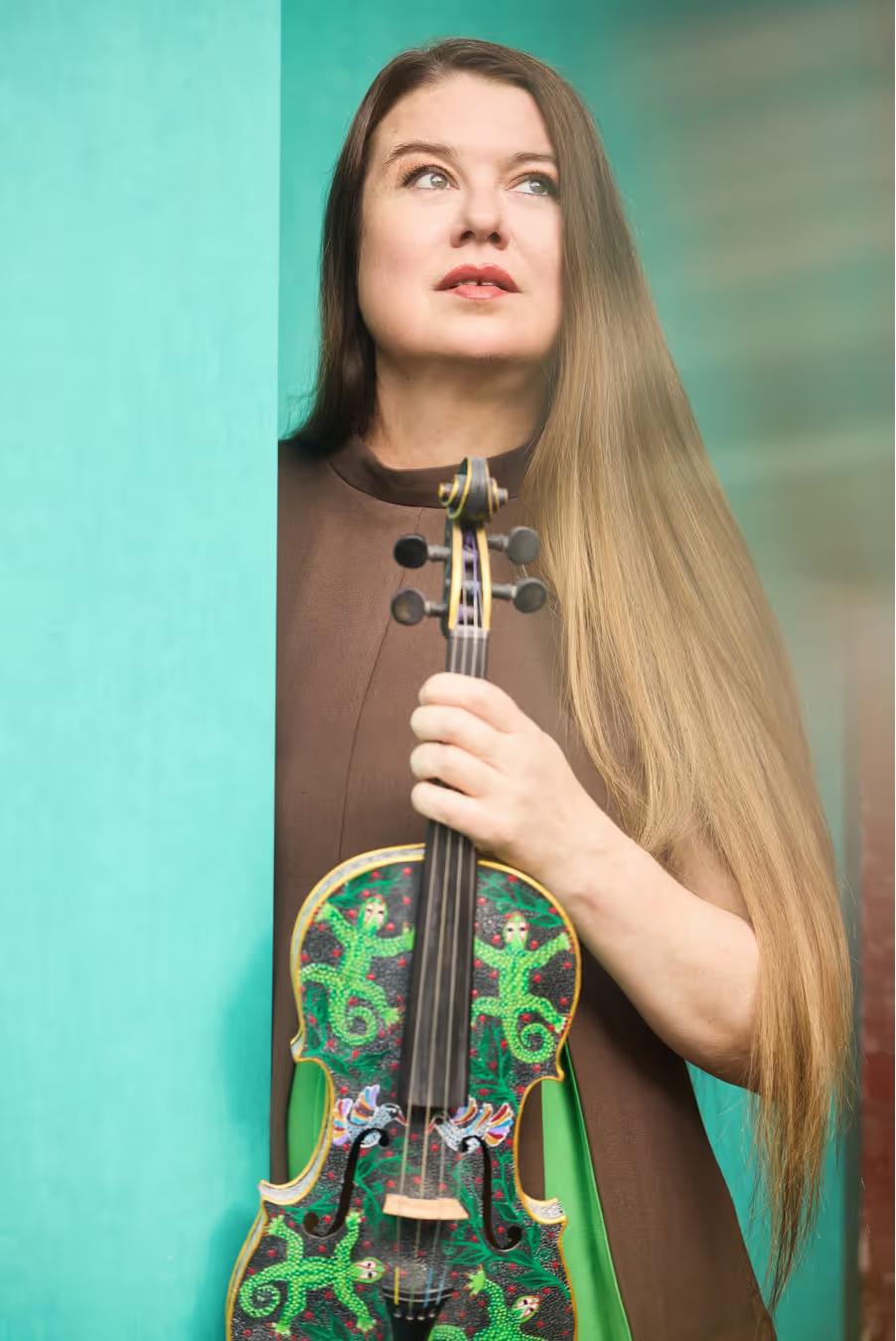
The Musician
After performing for decades around the globe as a “high-powered soloist” (The New York Times),Canadian-born violinist Lara St. John has chosen to dispense with a conventional biography, preferring instead to offer the following personal statement:
“I began playing the violin when I was two years old and have continued to do so ever since. But even though my career has had many high points and offered real artistic satisfaction, I cannot honestly say I would do it all over again. It has required horrific sacrifices– including my experiences with child sexual abuse and being treated as little more than a commodity by a long list of presenters, administrators and so-called educators.
“Rampant misogyny continues to be depressingly commonplace in the world of classical music, incredibly, even as we fumble our way toward the middle of the 21st century. This has drained away a lot of the sheer joy of making music for me.
“At the same time, I have made some wonderful friends in this business. I will always have faith in them and in the profound power of music to inspire and to heal. I will never stop being amazed by the possibility within a simple instrument like the violin. But my desire to use it as a tool for making a living has fallen off to almost nothing.”
Lara has performed as a soloist with most of the world’s major orchestras. She also owns her own recording label, Ancalagon, which she founded in 1999. In 2022, she released she/her/hers, her label’s 16th album, featuring solo violin works by women. After going public with her own experience of being raped by her professor at the Curtis Institute of Music when she was 14 years old, Lara heard from many other survivors of abuse at the hands of music teachers, conductors and colleagues, with the complicity of their respective institutions. She has now finished Dear Lara, a full-length documentary on this subject which will have its world premiere in early 2026.
In 2021 Lara was invested with the Order of Canada, her country’s highest honor. She is a knight of Burgundy and a reptile enthusiast. She owns and performs on a 1779 Guadagnini, a 2011 David Wiebe and a 2024 Isabelle Wilbaux.